For days away from the table
Atlas TriCorder
The field device.
A pocketable handheld in a Game Boy Advance–style body: physical d-pad and buttons, 3.5" screen, and a front camera for scanning iNQ Cards on the trail or at the museum. Slips in a jacket pocket; about 220 grams — so nature study and co-op days do not require a full tablet bag.
Why a Handheld?
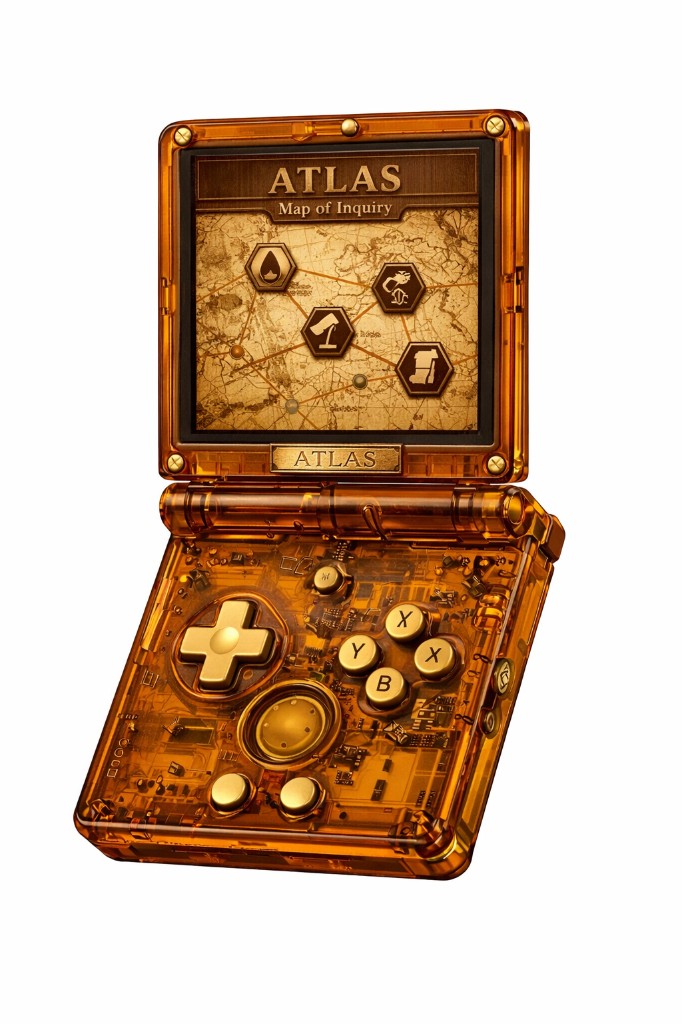
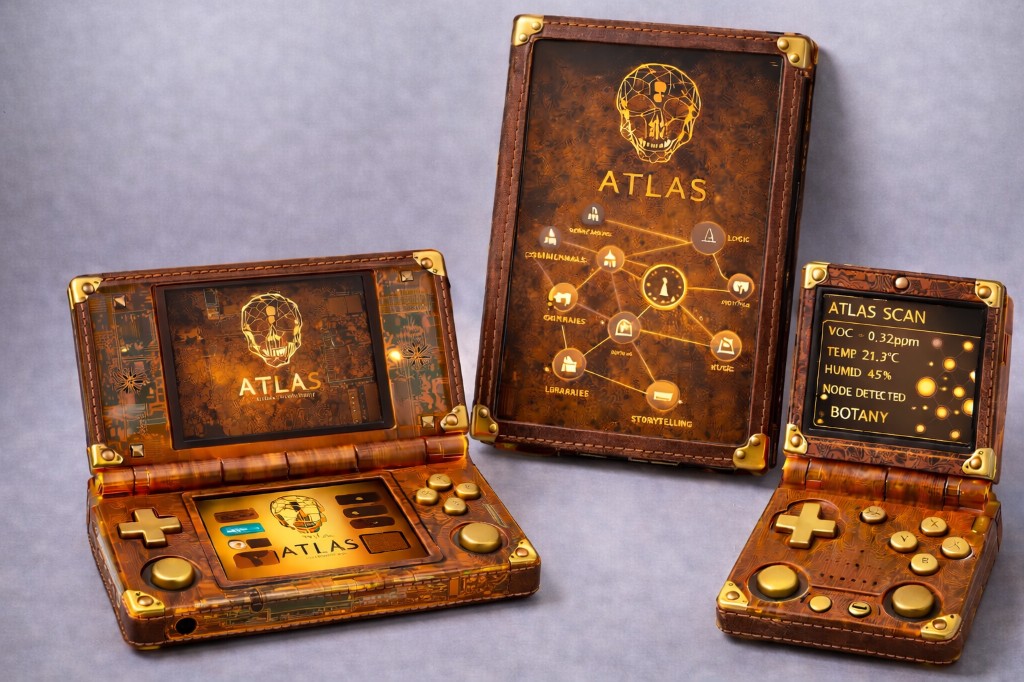
Homeschool days are not only at the desk. Nature walks with specimen cards, museum visits with exhibit tags, a student using terrAIn from the couch — the TriCorder is for when you want compute in hand, not a slate on a table.
The physical buttons matter. D-pad navigation and tactile action buttons mean you can operate it without looking at the screen — useful for terrAIn teleop, audio activities, and any situation where touch-screen gestures are awkward or imprecise.
iNQ Card Scanner
The TriCorder has a 2MP front-facing camera — enough to scan QR codes on iNQ Cards without the Sense add-on. Point at a card; the device loads the lesson or resource from your local library or Inquiry Appliance — the same content you curated at home.
Faculty Cards, Expedition Cards, subject stacks — they all work. This is the most portable way to carry your card-based curriculum off the kitchen table.
terrAIn Controller
The TriCorder doubles as the primary handheld controller for terrAIn. The d-pad controls vehicle movement, the screen shows the camera feed or terrain map, and the physical buttons handle action commands — bucket up, dump, blade angle.
With the DS, you get dual-screen control (map + camera). With the TriCorder, you get one-handed, pocketable control. Different trade-offs for different situations.
Specifications
DS vs. TriCorder
| Atlas DS | TriCorder | |
|---|---|---|
| Form factor | Clamshell tablet | Handheld |
| Screens | 7" IPS + 4.2" E-ink | 3.5" IPS |
| Camera | None (add via Sense) | 2MP built-in |
| Physical controls | Touch only | D-pad + buttons |
| Best for | Desk work, narrations, book mode | Nature study, travel, terrAIn |
| Weight | 380g | 220g |
Atlas TriCorder
Join the founding cohort for hardware at cost and input on the roadmap — including how handhelds fit field days for home-education families.
Join the Founding Cohort