Prepare on Wi-Fi
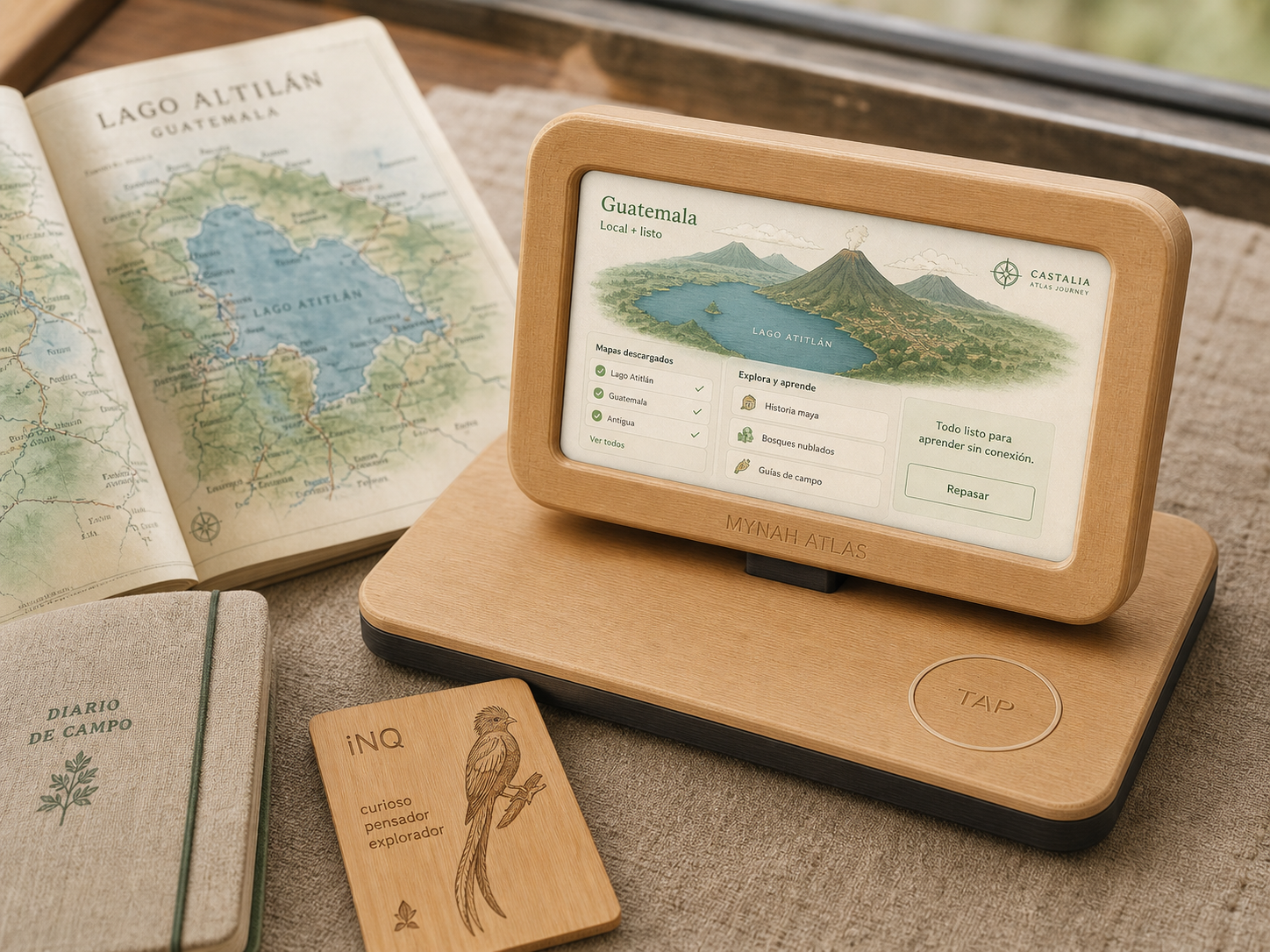
Travel Mode checks the route, storage, updates, and coverage—then brings maps, language, stories, ecology, and field guides onto Atlas before departure.
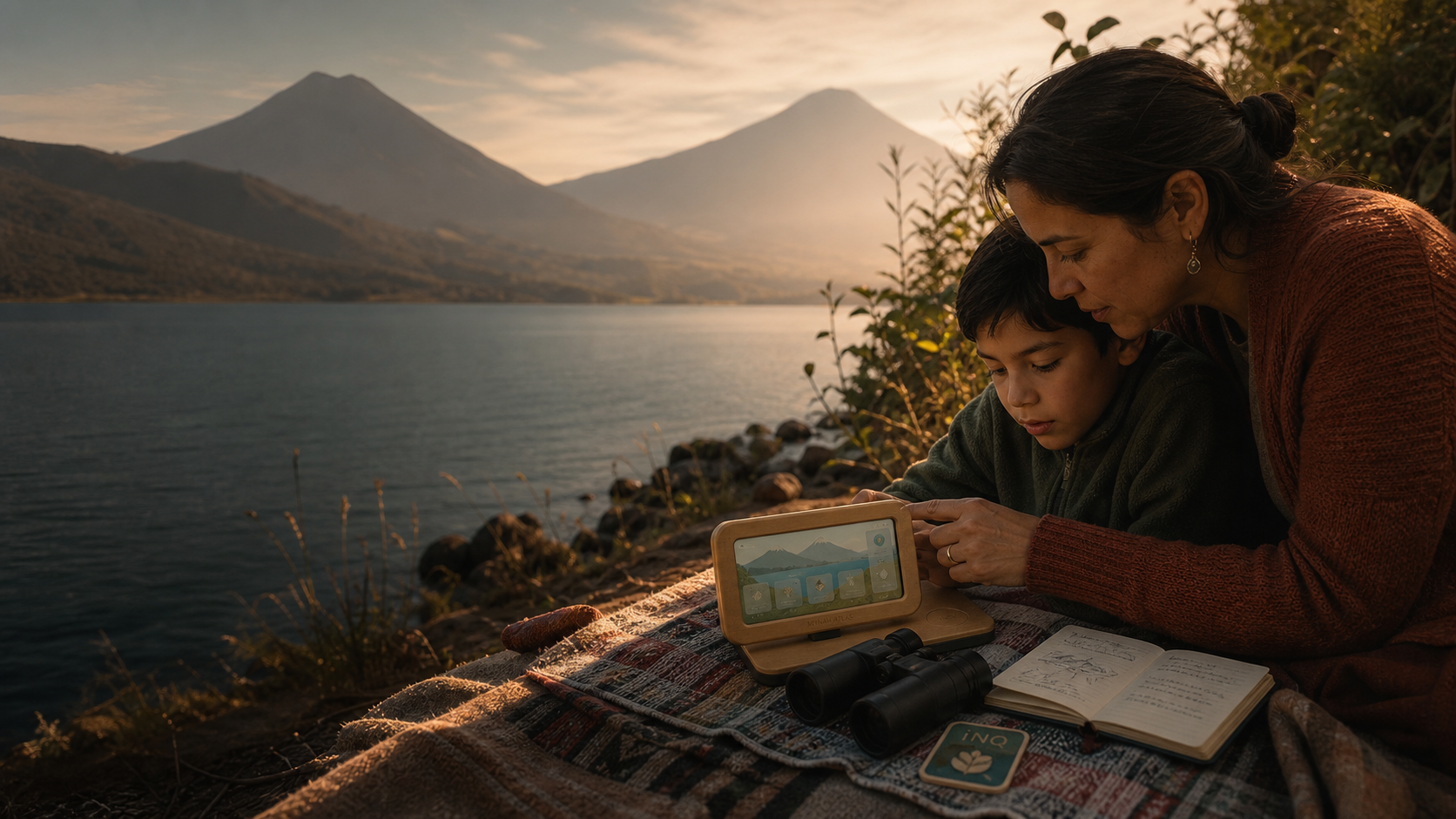
Castalia Institute · Proposed architecture
Offline by design. Connected wherever the family goes.
Atlas Global pairs a child-first learning instrument with World Packs, Travel Mode, and quiet connectivity that steps in only when it is useful.
Visualized concept · hardware in development
World → Atlas → network
Atlas does not become useful when a signal appears. It begins with what is already in the child’s hands, then reaches outward only when connectivity adds something meaningful.
Travel Mode checks the route, storage, updates, and coverage—then brings maps, language, stories, ecology, and field guides onto Atlas before departure.
Books, notes, translation, field guides, the Gazetteer, iNQ indexes, and local AI remain useful where signals disappear.
Atlas chooses the lightest trusted connection available and sends the smallest useful request—not a constant stream of a child’s life.
Automatic by design
A family should be able to cross a border while Atlas keeps maps, observations, questions, reading, and check-ins working—without a child thinking about roaming profiles or network registration.
World Packs
A World Pack is a locally stored destination library. Before departure, Travel Mode prepares the route and checks that the knowledge a child may need is already aboard.
On arrival, Atlas introduces the place through educational—not commercial—context.
A careful data plan
Atlas processes locally whenever practical. Continuous uploads of a child’s conversations, photographs, browsing, microphone audio, or precise movement sit outside the default architecture.
Books, maps, notes, translation, iNQ cache, and local AI.
Messages, check-in, identity, status, and recovery metadata.
Web pages, text AI, small images, and selected map tiles.
Video, updates, full regions, model downloads, and backups.
Family awareness, not surveillance
Families can begin with a bounded Seed experience and open capabilities toward Explorer, Scholar, and Independent. Check-ins and location sharing remain configurable. Lost Mode preserves a small connectivity reserve for recovery when an ordinary quota is exhausted.
The child’s work remains close to the child unless sharing creates clear value.
Management, family messages, check-in, and recovery keep a narrow path home.
The field plan
WorldSIM is a proposed Castalia service, not yet a promise of unlimited coverage. Each gate tests the experience, cost, support, privacy, and reliability needed for families to trust it.
Qualify the exact handset, Knox enrollment, SIM behavior, USB, NFC, and optics.
Test family setup, network switching, messaging, Lost Mode, and real data use.
Measure registration and handoffs across the U.S., Canada, Mexico, Guatemala, the U.K., and E.U.
Learn from real journeys, offline failures, support needs, World Packs, and wholesale costs.
Prove sourcing, automated enrollment, billing, updates, and family support.
The final principle
It should teach them how to use the world.
Become a founding family